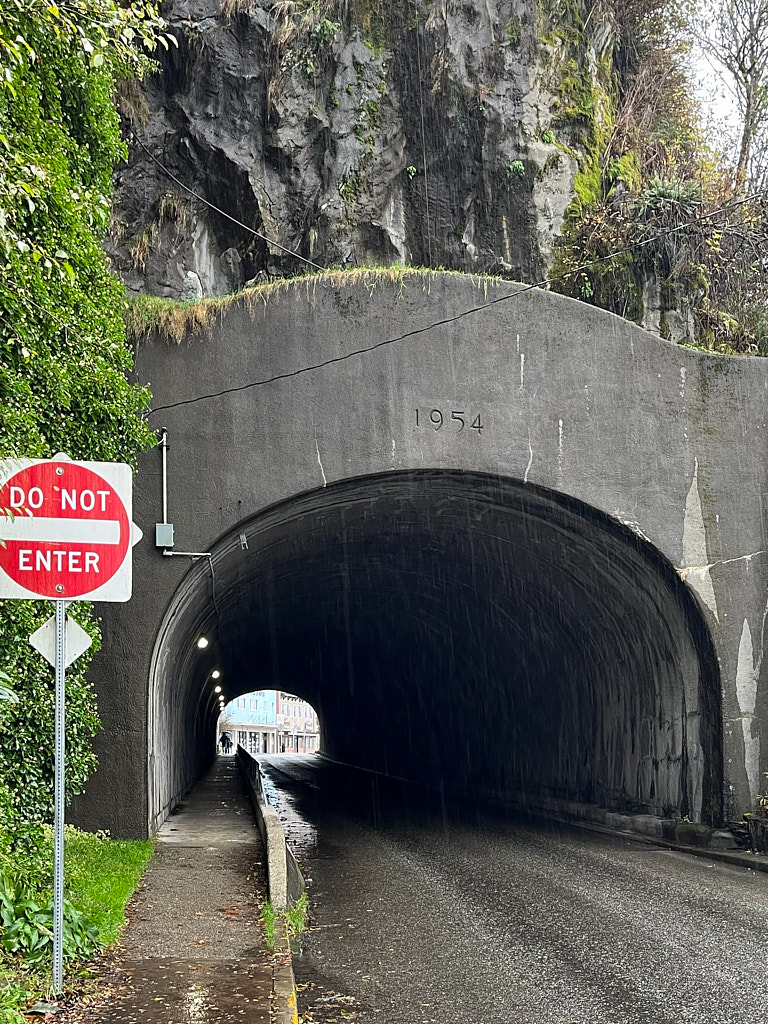
In Ketchikan, the town does not rest on the land so much as negotiate with it. The forest comes down to the tideline and stops, and everything that follows—the street, the storefronts, the long grey planes of dock—is decked out over the water on pilings, or driven straight through the hill that stood in the way.
It is the second week of October. Nearly a million visitors pass through here between May and September, and none of them are here now. The ships still calling are the last few of the year, and ours is one of them. What is left behind, when the season closes, is the thing the season was built on top of: a narrow town in a steady rain, doing what it does the other seven months.
Chapter 1: The Cut
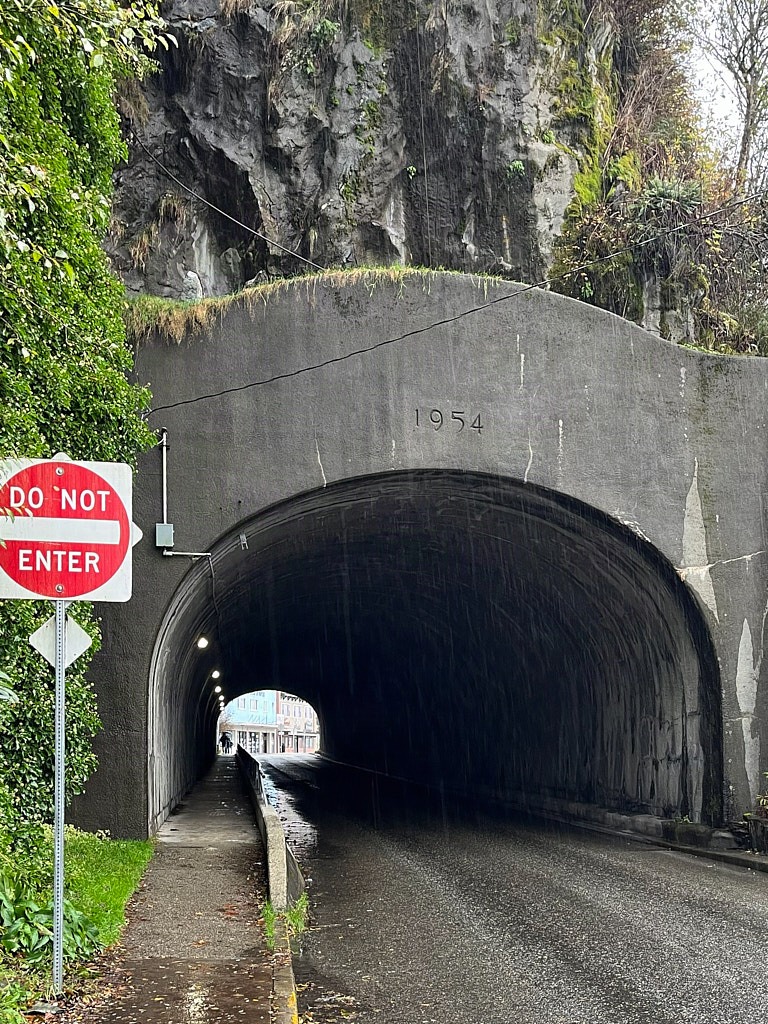
The Portal
Nob Hill stood between downtown and the waterfront for half a century, and the town simply went around it. In 1954 they cut through instead. The date is still set into the concrete above the arch. Direct Capture 2024-10-10 [1]
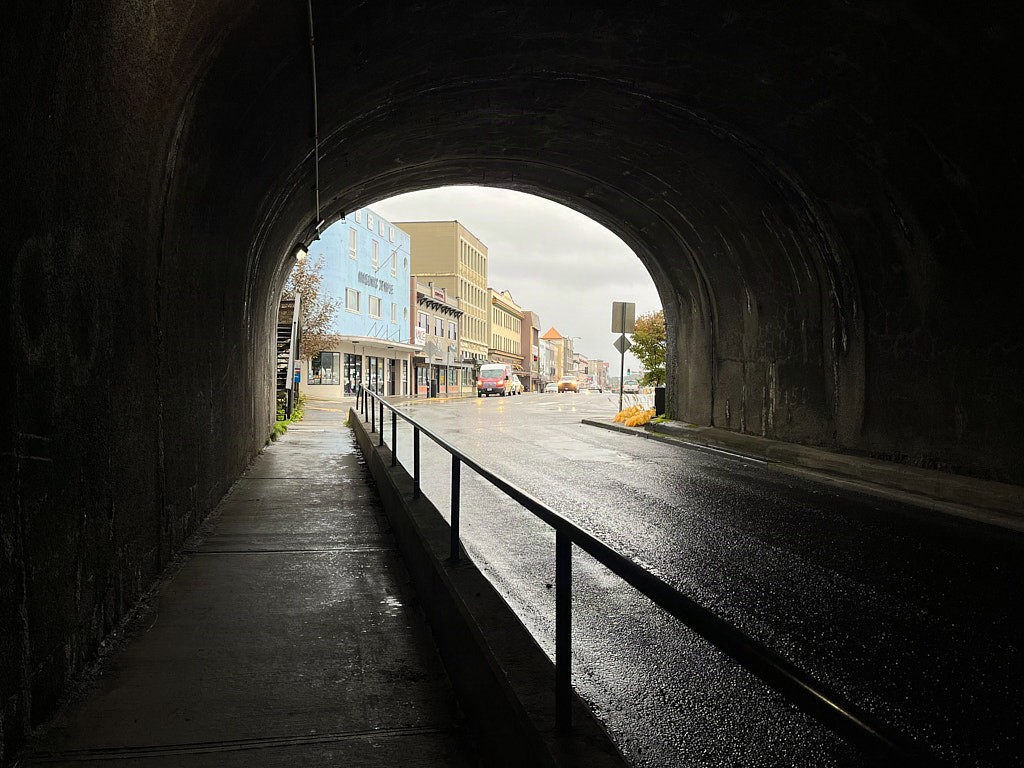
The View From Inside
From within the dark, the town is a bright rectangle at the far end: a blue facade, wet asphalt, two parked cars, nobody walking. The rock does the framing. Direct Capture 2024-10-10 [1]
Chapter 2: Under the Rain
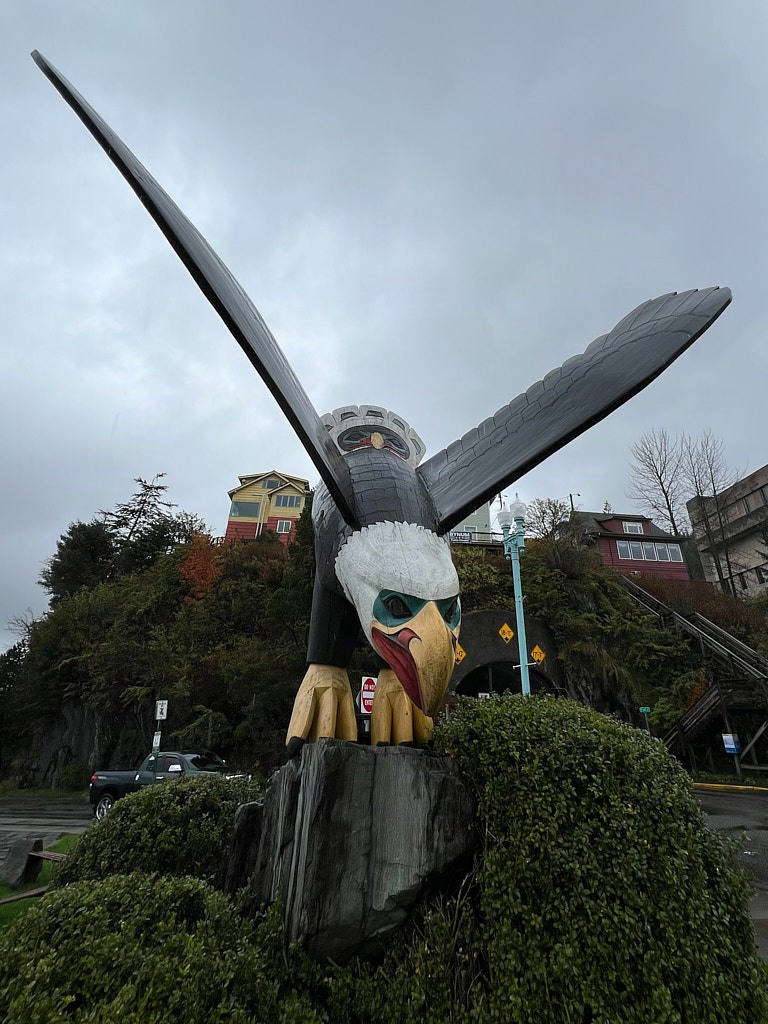
Thundering Wings
Carved in 1993 by Tlingit master carver Nathan Jackson, the eagle stands near the tunnel mouth in a posture of departure. The town’s name is thought to come from a Tlingit phrase for the thundering wings of an eagle—so the sculpture is the place, saying itself. Direct Capture 2024-10-10 [1]
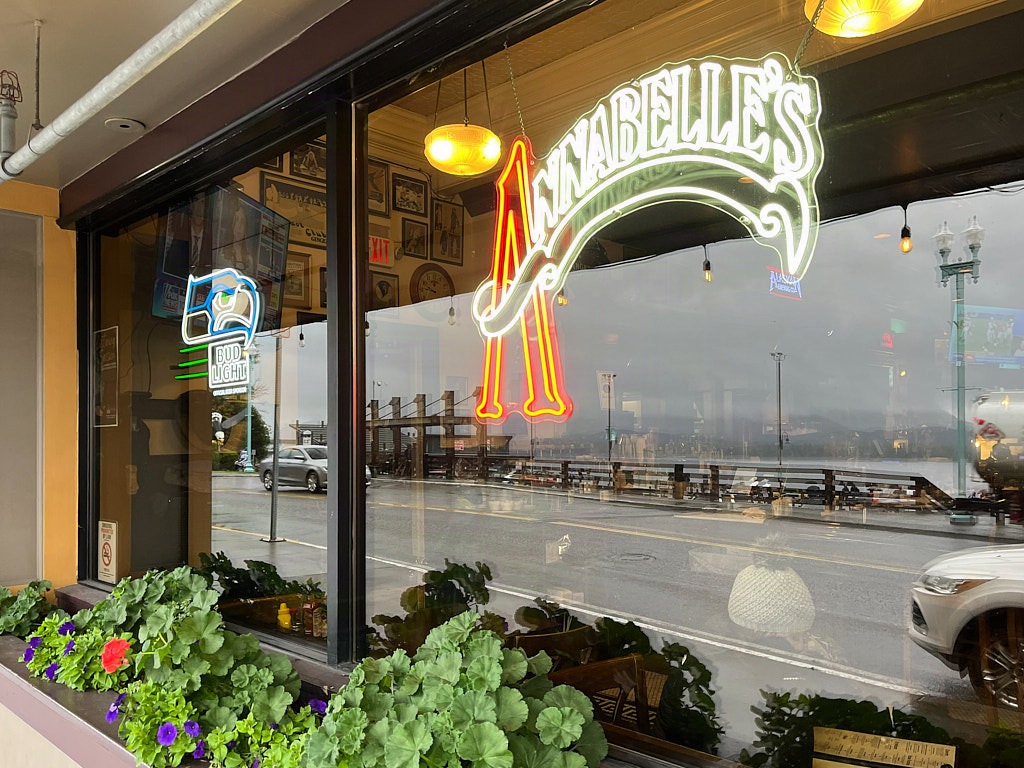
Annabelle’s
Neon behind glass in the Gilmore Building, on the National Register since 1927. The window holds two views at once: the warm room inside, and the grey channel reflected across it. Direct Capture 2024-10-10 [1]
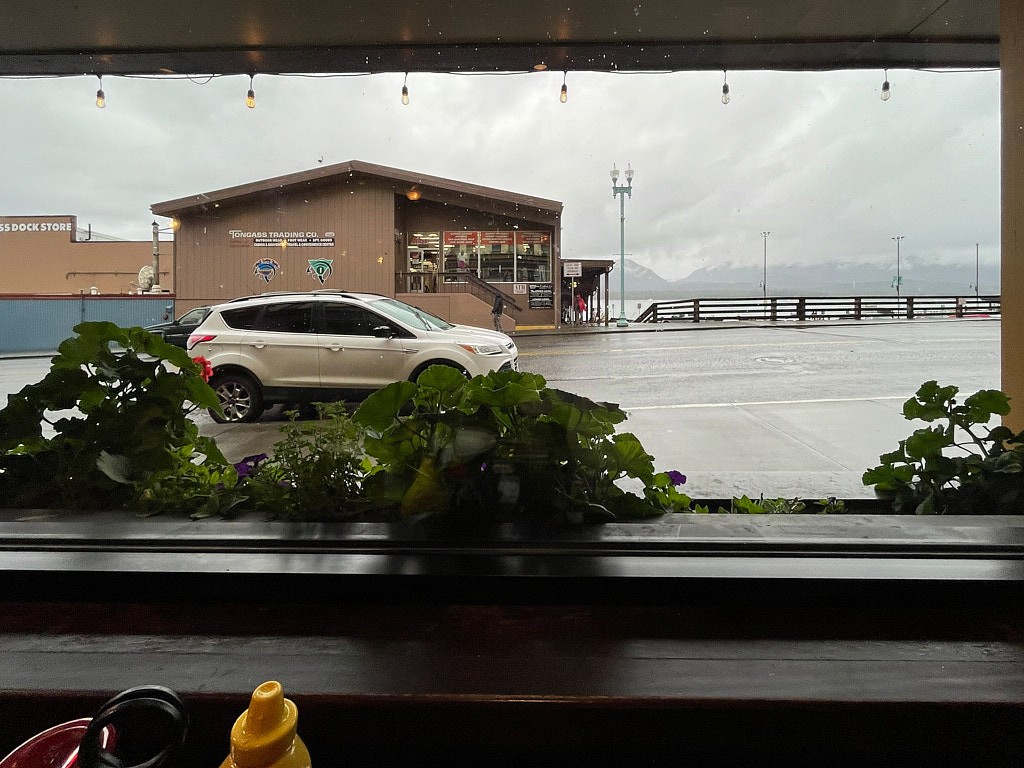
The Oldest Store
Looking out from a booth toward Tongass Trading Co., which has served Southeast Alaska since 1898. The planter greens are still going. The lot is nearly empty. Direct Capture 2024-10-10 [1]
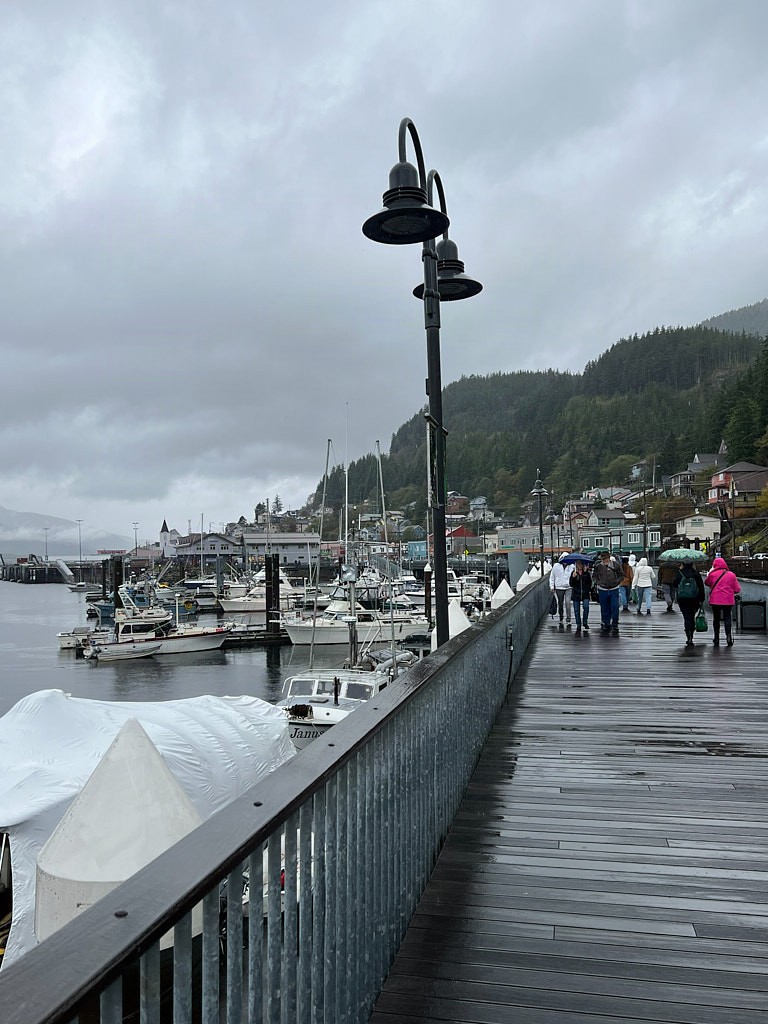
Tarped for Winter
The boardwalk runs north past covered hulls and a working harbor. The bright jackets in the distance are the only saturated color on the waterfront, and they are all walking to somewhere. Direct Capture 2024-10-10 [1]
Chapter 3: Back to the Ship
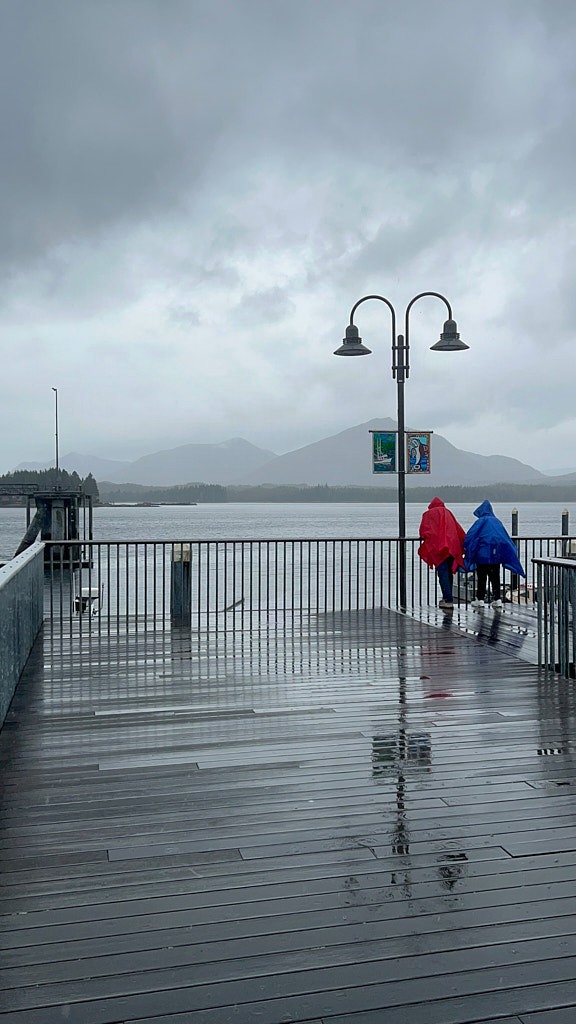
Two Ponchos
Red and blue at the end of the pier, the last color before the water goes grey and the mountains go grey behind it. The deck holds the reflection of everything above it. Direct Capture 2024-10-10 [1]
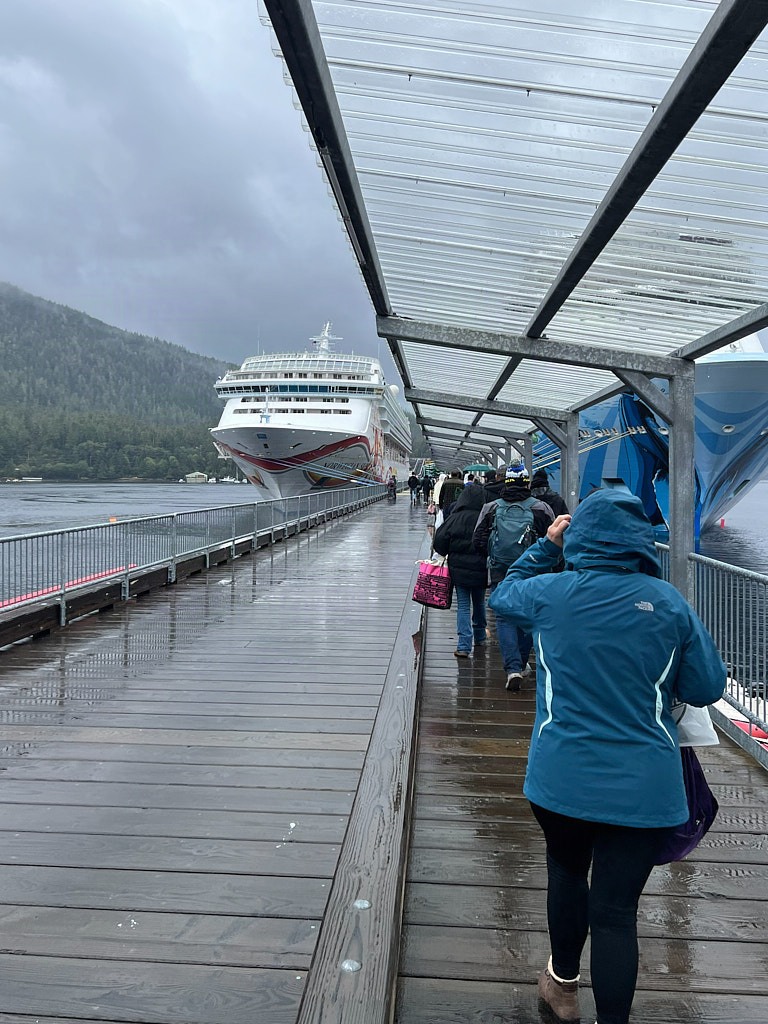
The Gangway
Under the covered walkway, the last of the day’s passengers file back toward the hull. In four hours the berth will be empty, and it will stay that way until spring. Direct Capture 2024-10-10 [1]
The ship leaves in the afternoon and turns north. Ketchikan gets rain almost without pause and will get it all winter, and the shops on Front Street will sell down the last of the season and close their doors. The tunnel will go on doing the only thing it has ever done, which is join one end of a very narrow town to the other. The eagle keeps its back to the water.
North of here the color turns, the snow comes down the mountains to meet us, and the towns get smaller. We follow the water.
The Last Boat Dispatches
The Last Boat: Ketchikan
The Last Boat Index
Footnotes
[1] Series: The Last Boat: Ketchikan
Source: Donald R. Anderson | Direct Capture: 2024-10-10 > Processing: Standard adjustments (Exposure/Crop). No Generative AI used.
Verify C2PA: Inspect Authenticity